

News & Insights
Latest news and legal insights from HANBYOL LAW LLC.
Identifying the 'New Bubble Area' Jade Stones (Sunbo Byun, Attorney)
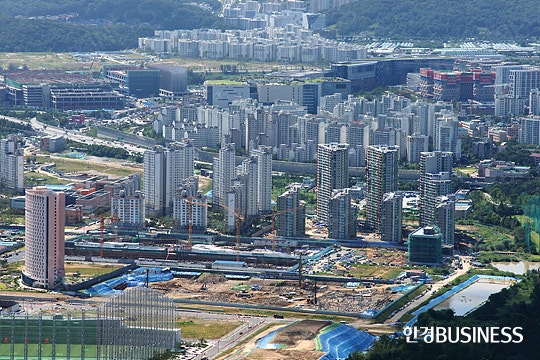
The real estate market has heated up. Investors and buyers alike are buying homes like nobody's business. There are also signs of overheating. This may be fine for experienced real estate investors, but novice buyers need to be careful.
According to data released by the Seoul Real Estate Information Plaza on May 19, the number of apartment transactions in Seoul from May 1 to 18 was 7,305, already surpassing the number of transactions in May 2014, which was 6053. Despite May being generally categorized as an off-season in the housing market, the average daily transaction volume is 406. At this rate, the total number of transactions is expected to reach 12,500 this month, which would put it on track to surpass May 2006 (11,631 transactions), the highest number of actual transactions since the survey began. This is expected to continue the streak of the largest transaction volume since 2006, which began in January.
The buoyant housing market is analyzed as a result of an increase in the number of buyers switching to buying due to the unrelenting rental shortage. "Real buyers who are unfamiliar with real estate investment are good prey for builders," said Shin Dae-sung, CEO of real estate transaction information company Balbum. "Some of the new condominium complexes that have recently succeeded in selling at prices far exceeding the asking price may have been due to unasked-for applications from novice buyers who were swept up in the excitement."
In fact, new condominiums are poor investments. It's wiser to choose an existing apartment with a better location and a lower price than a new apartment that emphasizes the fact that it's new and therefore has a higher selling price. Nevertheless, there are many naive beginners who are drawn to new apartments. The solution is simple. Be selective. There are many so-called "hot areas," but there are also many "bubble areas" that hide their disadvantages and emphasize their advantages. We take a look at the bubbles of the hot areas that have been in the news lately.
'Land Development District' vanguard, full of loopholes
The hot areas have something in common. They are called 'land development districts'. Large-scale residential zones are called 'new cities' and were once popular with investors, but they have become mediocre areas due to indiscriminate zoning. However, as the government abolished the Land Development Promotion Act last year as part of the 9-1 real estate measures, and decided to stop designating large-scale public land by 2017, the scarcity has been highlighted, and the spotlight is on them again.
The centerpiece is Wirye New City, Dongtan 2 New City, and Kimpohan Gang New City. Experts agree that they should be carefully selected.
The first area to look at is Wirye. Wirye has been leading the real estate market's upswing since last year and has been writing the myth of the sold-out housing market. However, there are also risks. First of all, the plan to install a 'tram' (streetcar), a key part of the new city's development plan, is still unclear. The tram, which will run 5.4km from Macheon Station on Subway Line 5 to Unam Station on Line 8 (scheduled to open in 2017), was originally planned to open in 2021. In addition, the timing of the relocation of the military base (Special Forces Command) north of Wirye is still unclear. The planned sale of 7,300 housing units has already been pushed back to 2018, which could disrupt the entire development plan for the new city. In this regard, an official from the Korea Land and Housing Corporation (LH) said, "The tram needs to be approved by the Ministry of Land, Infrastructure, and Transport, but it is not being approved due to problems such as profitability, and the relocation of the military base is facing many difficulties, but we are pushing forward with the goal of relocating it in September or December."
The situation in Dongtan 2 is not much different. Dongtan 2 is a large-scale new city built on 24.01 million 825 square meters (7.26 million pyeong) of land. The combined size of the neighboring Dongtan 1 New Town and Dongtan General Industrial Complex (35 square kilometers) is 1.8 times that of Bundang and 2.2 times that of Ilsan. Its distance from Seoul has been cited as its only drawback, but the opening of the GTX (Greater Seoul Metropolitan Area Express Railroad) has alleviated that concern. However, the highly anticipated GTX has yet to be finalized. According to LH, the company is currently in talks with the Korea Railroad Facilities Corporation over financial issues and is looking to change the timing of the opening. In addition, according to LH, Dongtan 2 has not even been sketched out except for the area near Dongtan Station because the project implementer for the regional transportation plan has not been decided. Another issue is cost. "It's frustrating that GTX, which is considered a prerequisite for investment due to its distance from Seoul and severe traffic problems on the Gyeongbu Goso Road, is stuck in a budget crisis," said Park Mo, a housewife in her 30s who is considering investing in Dongtan 2. "I've been worried since the debt-laden LH took the lead."
Dongtan 2, 'GTX' is the key...
In addition, there are also concerns about oversupply in Dongtan 2. More than 10,000 households are scheduled to move into Dongtan 2 every year, starting with 15,000 this year. Experts say that the market situation may become unclear when people move in about two years after receiving the condominiums, which is a bit late. "Dongtan 2 is definitely a 'hot spot' with many advantages, but if the number of units starts to rush in at once, the sales and rental prices may drop significantly," said Jeong Tae-hee, head of the real estate research team at Real EstateServe. "In fact, land development districts that had a short supply of apartments for a short period of time before should be approached with caution, as the price decline was high at the time of move-in."
A bubble warning has also been issued for the hotly anticipated Gimpo Hangang New Town. The area was once shunned as a graveyard of unsold properties. However, as the real estate market has revived, unsold units have naturally cleared up, and complexes that have recently launched sales are seeing good results. 'Bando Yubora 3', which was launched in April, broke the record for the shortest time to sell out in Gimpo City. 'Hanang New City Bando Yubora 4th', which started to welcome customers with momentum, also closed all types in the second round of subscription on May 14."
The revival of the Hanang New City real estate market is also attributed to the visibility of Gimpo Metro, which was considered a long-awaited project of Hanang New City. The Gimpo Metro is scheduled to open in 2018, with nine stations connecting a total of 23.82km. When it opens, it will be possible to travel from Hangang New Town to Gimpo Airport Station in 20 minutes, and to Seoul Station and Gangnam in less than an hour.
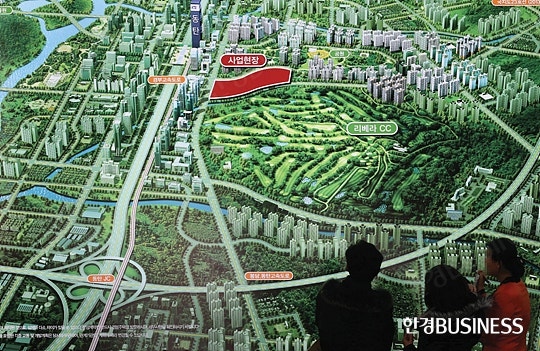
But there are still some uneasy eyes on Hangang New Town. While the market has been revitalized by real buyers from hard-pressed areas such as Gangseo-gu and Incheon-Ilsan in Seoul, where prices are relatively low, many analysts say it will be difficult to attract more external demand. This is partly due to the recent increase in the prices of new apartment complexes in Hangang New Town.
In fact, the average price of apartments in Hangang New Town has been rising again. According to Real Estate 114, the average price of a new apartment in Hangang New Town is currently (as of the 3rd week of May 2015) KRW 10.18 million per 3.3 square meters. This is a whopping 27% increase from 2013, when the average price was KRW 8.01 million. By year, the average price was KRW 10.77 million in 2008, KRW 9.75 million in 2009, KRW 9.78 million in 2010, KRW 9.71 million in 2011, KRW 9.69 million in 2012, KRW 8.01 million in 2013, and KRW 10.18 million in 2015. In particular, there is growing concern that the increase in sales prices is greater than the average sales price of apartments in Han River New City. In fact, from December 2013 to May 2015, the average sales price per 3.3㎡ of apartment in Hangang New City increased by only 7.92% (from KRW 8.96 million to KRW 9.67 million) (Real Estate 114).
You should also take a closer look at urban renewal projects such as redevelopment and reconstruction. The checkpoints are a little different. While residential zones focus on location conditions and development favorability, redevelopment and reconstruction areas need to pay more attention to price. Since April 2015, the price cap on private residential land has been abolished, which is driving up the price of redevelopment and reconstruction apartments. While prices in public housing districts, which are still subject to the price cap, are stable, prices in redevelopment and reconstruction complexes that develop private housing are rising rapidly.
Seoul Redevelopment Complexes, High Prices Warning
The first complex that experts pointed out as a bubble is 'eConvenient World Sinchon' (Bukhyeon New Town 1-3). On May 13, the first round of subscription was held, and 5,354 people applied for a total of 501 units (excluding special supply) in the area, with an average of 10.68 to 1, and the subscription was fully subscribed. Despite the successful completion of the subscription, the reason why the area was labeled as a bubble area was due to the sales price. The average selling price per 3.3 square meters of 'eComfortable World Sinchon' is around 20.6 million won. This is lower than the price of Gyeonghuigung Jai, which was sold by GS E&C in November last year, according to Daelim. The average selling price of Gyeonghuigung Jai was 22.8 million won per 3.3 square meters. However, experts point out that Gyeonghuigung Jai's sales price was not normal. Gyeonghuigung Jai attracted up to 50-to-1 competition at the time of the subscription, which did not lead to a contract.
As of the end of March, 150 of the 1085 units remained unsold, according to the Seoul Metropolitan Government. The price of the units was cited as the reason for the unsold units. "Lotte Castle in Deoksugung Palace, which was sold in 2013, was priced at an average of 16.36 million won per 3.3 square meters, but considering that Lotte Castle is a residential complex, 22.8 million won per 3.3 square meters seems to have been an unreasonable selling price," said an official from an A-accredited brokerage in Jung-gu, Seoul. "The selling price of eComfortable World Sinchon is similar to the selling price of Mapo Ramian Prugio (Aehyeon 3 district, moved in September 2014), which faces one of the streets (3.3㎡), but it was evaluated as high and remained unsold for a long time, then was discounted and finally sold out just before moving in," he added. In fact, there are many redevelopment and reconstruction complexes that have unreasonably high sales prices, which are measured during the process of negotiating the sales price between the members and the contractor. This is because the members have no choice but to pay for the additional cost of the project due to the real estate market downturn by raising the price of the general sales units. The same is true for eHanseong Sinchon, Gyeonghuigung Jai, and Mapo Lamian Prugio."
The situation in the Gangnam rebuilding market is even more serious. With the abolition of the price cap, which has been considered an eyesore, developers are poised to raise prices one by one. The first such announcement is expected to be made at the reconstruction site of 'Samhogarden 3' in Banpo-dong, Seocho-gu. Ahead of the general contractor selection meeting scheduled for June 13, three companies, Daelim Industries, Hyundai E&C, and Lotte E&C, are competing for the project. Recently, Hyundai E&C proposed an average sales price of 36 million won per square meter for Samho Garden 3, while Daelim and Lotte offered prices as low as 36 million won. The industry expects Samho Garden 3 to sell for up to 44 million won. As Banpo Jugong 1 and Sinbanpo Hanshin 15 are scheduled to be constructed one after another, the sales prices of Gangnam's rebuilt complexes are expected to soar further.
"Members should keep in mind that they could end up in a tougher situation due to unsold units after forcibly raising the sales price to cover the increased share, and investors should carefully analyze the sales price level by comparing it with the surrounding market price," said Byun Sun-bo, a lawyer at Hanbyul Law Firm. "Especially, if the sales price of Gangnam reconstruction complexes skyrockets, it could deepen the phenomenon of residential polarization and cause various social problems, so the government needs to thoroughly monitor it."
Byung-Hwa Kim kbh@hankyung.com